
Welcome Readers
Here you'll find insightful articles, tips, and templates on agile coaching and visual thinking techniques, all designed to help you succeed. Whether you're looking to stay up-to-date on the latest trends and best practices, gain insights from thought leaders in your industry, or simply expand your knowledge, my blog has something for everyone.


From Forming to Performing: Understanding Tuckman's Model of Team Development
Dr. Bruce Tuckman's development model, also known as the Tuckman model, is a widely recognised framework for understanding the stages of group development. According to Tuckman, all groups go through four distinct stages: forming, storming, norming, and performing.
In the forming stage, group members come together and begin to get to know each other. This stage is characterized by polite and superficial interactions as group members try to establish a sense of safety and belonging.
As the group becomes more comfortable with each other, they move into the storming stage, where conflicts and disagreements may arise as individuals assert themselves and vie for power or influence within the group. This stage can be challenging, but it is essential for the group to work through these issues in order to move forward.
Once the conflicts have been resolved, the group moves into the norming stage, where they establish shared values, goals, and norms for behavior. This stage is marked by increased cooperation and collaboration as group members work towards a common purpose.
Finally, the group reaches the performing stage, where they are able to work together effectively and efficiently towards their shared goals. This stage is characterized by high levels of productivity, creativity, and satisfaction among group members.
Understanding the Tuckman model can help you better navigate group dynamics and build more effective and productive teams. By recognizing which stage your group is in and taking appropriate actions, you can help your team move through the stages of development and achieve success
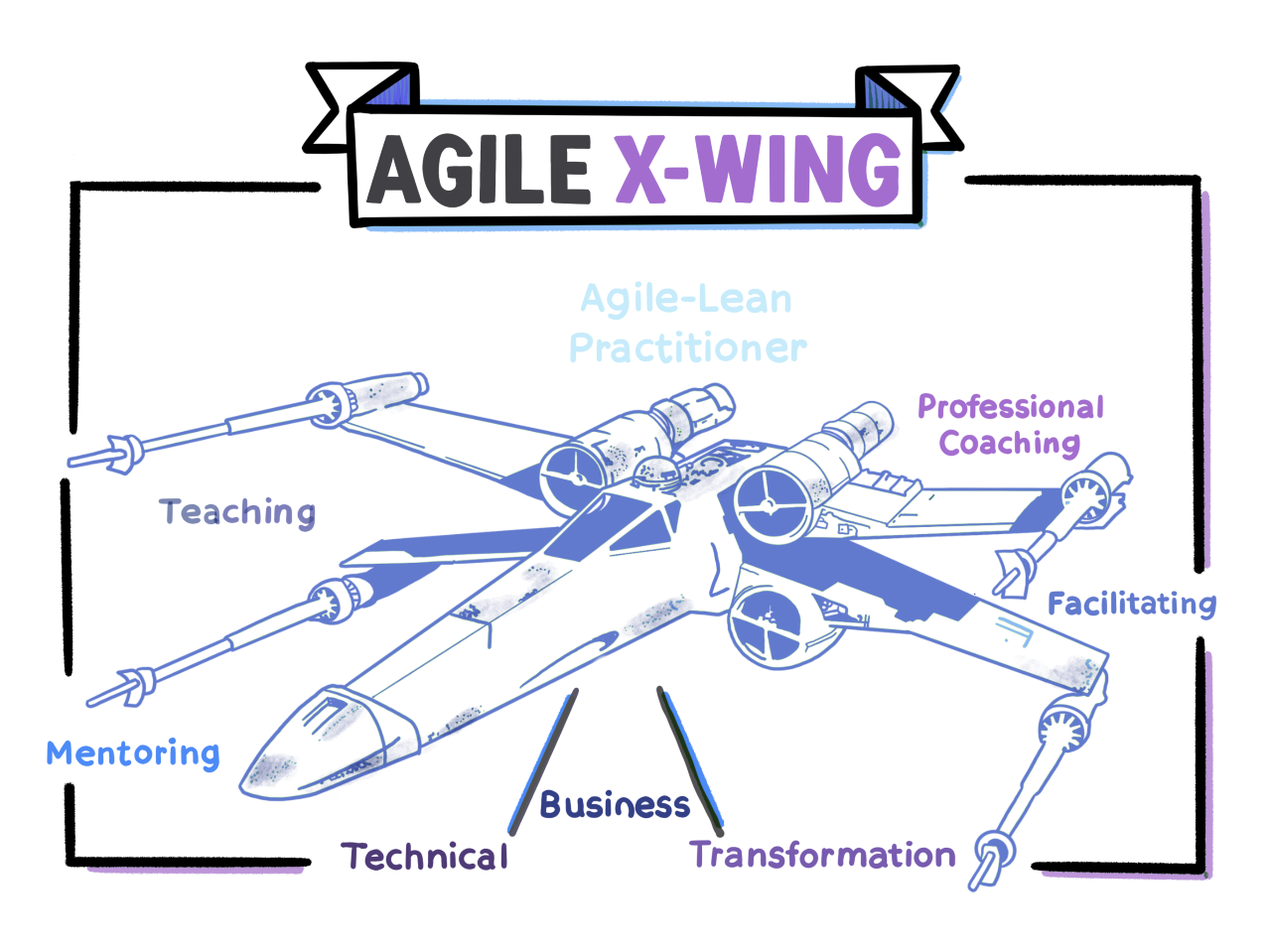
Agile X-Wing Coaching Framework
The Agile Coaching Competency Framework is a valuable tool for Agile coaches to evaluate their skills and competencies. It provides a clear roadmap for Agile coaches to develop their skills and become more effective in their roles.
The framework outlines the competencies required for Agile coaching, such as facilitation, mentoring, coaching, and teaching. By using the Agile Coaching Competency Framework, coaches can identify their strengths and weaknesses and focus on areas that require improvement. Ultimately, the framework helps Agile coaches to deliver better results for their teams and organisations.
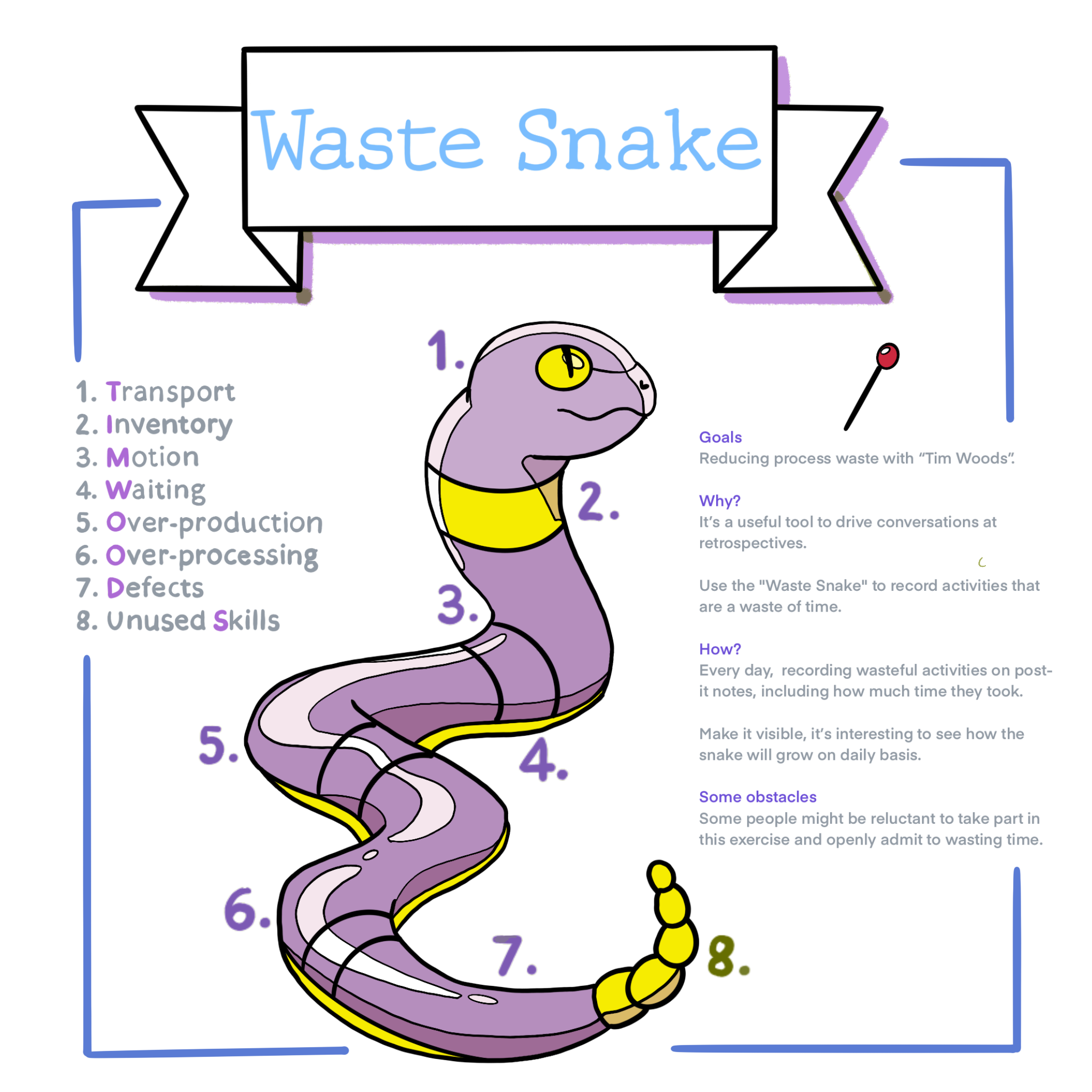
The Waste Snake
𝐖𝐚𝐬𝐭𝐞 𝐒𝐧𝐚𝐤𝐞 🐍 and 𝐓𝐈𝐌 𝐖𝐎𝐎𝐃𝐒
It’s a simple formality, when you are doing tedious low-value work, or waiting idly you write up a sticky note about it.
You select a central and visible place to record the type of waste so others can see it. Periodically you look at the visual and see what low-value or no-value tasks have been occupying the team’s time.
When you decide enough is enough, you allocate time to fixing the problem - reducing or eliminating the waste and wait times. I like to affinity sort, categorise into ‘insights/themes’, dot vote, and then explore potential experiments.
The real goal is to raise awareness of waste as the opposite of delivering value. It’s a critical tool to help empower teams who can control their own processes to identify non-value-adding wastes and discover ways to reduce or eliminate them.